Flight Data Show Amazon Cargo Jet Attempted Late Go-Around Before Fatal Miami Runway Crash
New details from the NTSB show the Boeing 767 briefly tried to abort its landing at Miami International Airport before overrunning the runway and striking a ground crew van, killing five people. Investigators are set to interview both pilots as the probe continues.

Why it matters
The crash killed five ground workers who had no connection to the flight itself, raising questions about airport worker safety and whether existing runway-overrun protections at major U.S. airports are sufficient. It also disrupted operations at one of the nation's busiest airports for days, affecting hundreds of flights.
What to watch
Investigators are set to interview both pilots Wednesday, after which the NTSB plans to release a readout of the cockpit voice recorder. A full probable-cause report, along with any safety recommendations, is not expected for a year or more, though preliminary findings may be issued sooner.
- 01Flight data indicate the pilots briefly attempted a go-around before the Boeing 767 overran the runway and crashed, killing five people in a ground vehicle.
- 02The NTSB has identified the pilots and scheduled formal interviews for Wednesday, after which it plans to release cockpit voice recorder details.
- 03Aviation experts say the plane's nose-first touchdown and a possible tailwind point to an unstable approach, though the full cause remains under investigation.

What Happened at Miami International Airport
A Boeing 767 cargo jet operating under the Amazon Air brand overran a runway at Miami International Airport on Sunday afternoon, tearing through a perimeter fence before slamming into a van used to shuttle aircraft-cleaning crews and then striking an SUV on a nearby roadway. Five people riding in the van were killed, and five others were hurt in the crash, which left the aircraft resting nose-down near the end of the runway with visible fire damage.
The flight, operated by North Carolina-based cargo carrier 21 Air on behalf of Amazon Air, had departed from San Juan, Puerto Rico, and was arriving in Miami on what officials say was its third leg of the day, having earlier flown between Cincinnati, Miami and San Juan. The jet was carrying a shipment weighing roughly 32,000 pounds, made up largely of contact lenses, according to investigators.
A go-around probably should have been executed sooner than that. And it seems like they hesitated.
Editorial principle
Why the Crash Is Drawing National Attention
The crash has become one of the more closely watched aviation incidents of the year, both because of the fatalities on the ground and because it disrupted one of the country's busiest airports for days. More than 225 flights were canceled in the immediate aftermath, with hundreds more delayed as crews worked to clear wreckage and investigators documented the scene.
It has also renewed public attention on ground worker safety at commercial airports. National Transportation Safety Board Chair Jennifer Homendy noted that airport employees performing routine tasks, such as riding in a van to clean an aircraft, are not typically thought of as facing runway-adjacent risks, underscoring how unusual it is for a crash to claim lives entirely outside the aircraft itself.
Inside the NTSB Investigation So Far
Investigators recovered both the plane's cockpit voice recorder and flight data recorder within a day of the crash. Homendy said the voice recorder captured more than two hours of usable audio, while the data recorder held roughly 55 hours of flight information spanning multiple prior flights, giving investigators a detailed record of the aircraft's final approach.
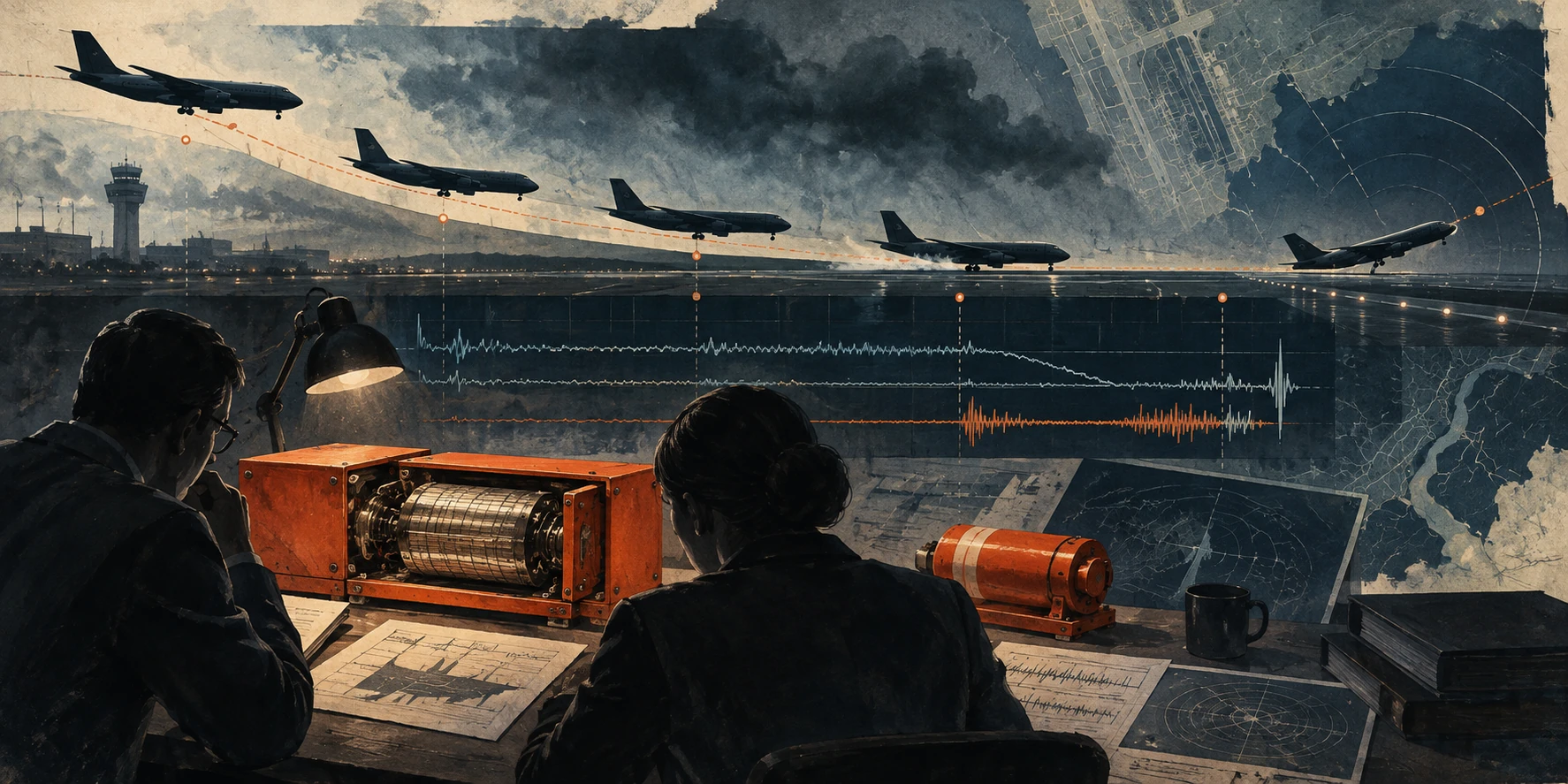
According to preliminary data presented by lead investigator Chihoon Shin, the jet's nose and right main landing gear touched down while the aircraft was still traveling at 158 knots. Roughly eight seconds later, the crew applied the brakes, then released them at a ground speed of about 120 knots before increasing the throttles to power levels consistent with an attempted go-around. Homendy has said the plane's thrust reversers were never deployed during the landing sequence, a detail investigators are examining closely.
Who Was Flying the Plane
Officials identified the flight crew as 55-year-old Captain Joseph Carroll, who had logged 7,145 flight hours as of the end of March, and 37-year-old First Officer Jaime Felipe Silva Molina, who had accumulated 2,655 flight hours as of late August. Both pilots were injured and hospitalized after the crash but have since been released, according to Miami-Dade County Sheriff Rosie Cordero-Stutz.
NTSB investigators say they plan to interview both pilots Wednesday to reconstruct their decision-making in the final seconds before impact. Homendy said the agency wants those accounts on record before publicly releasing a detailed readout of the cockpit voice recorder, so investigators can compare what the recordings capture against the pilots' own explanations of how they were operating the controls.
What Aviation Experts Are Saying
Former FAA official Mike O'Donnell said the way the aircraft touched down, nose and right landing gear first, is a strong indicator that the approach was already unstable before the crew attempted to recover. He suggested the pilots may have tried to salvage the landing rather than aborting it earlier, and that any go-around decision came too late given how much runway remained.
Aviation attorney Mary Schiavo, a former U.S. Department of Transportation Inspector General, said the sequence of events, including the mid-approach altitude correction captured in tracking data, raises the possibility that the two pilots were not in agreement about how to handle the landing. Weather is also under scrutiny: storms were moving through the area at the time, and experts say a tailwind may have pushed the aircraft further down the runway than intended, a factor that will likely shape questions about why air traffic control did not shift the active runway to allow for a headwind landing.
The Aircraft and Its History
The jet involved was a 32-year-old Boeing 767 that spent more than two decades flying passengers for airlines overseas before being converted into a freighter in 2015, according to flight-tracking service Flightradar24. It was operating as 21 Air's Flight 7598 under an agreement with Amazon Air, one of several cargo partners the e-commerce company relies on to move goods across its delivery network.
Amazon said in a statement that it is cooperating fully with the NTSB's investigation and extended condolences to the victims' families. The van struck in the crash belonged to Professional Ocean Service Corp., an aircraft-cleaning contractor, which said it would not comment further out of respect for the families affected and described its workers as family in a statement issued this week.
Airport Safety Systems Under Scrutiny
Homendy said investigators will examine whether the absence of a runway-end arresting system at Miami International Airport contributed to the severity of the crash. More than 120 U.S. airports use engineered, crushable surface material designed to slow and stop runway-overrun aircraft, a system the FAA credits with saving roughly 500 lives. Miami's airport does not have that technology installed, though other aviation safety specialists note the facility met FAA requirements for a runway safety buffer of at least 1,000 feet.
Homendy said runway excursions remain a persistent, largely preventable category of aviation accident, and that the agency's broader goal is to identify systemic gaps that allow them to keep happening despite decades of safety improvements elsewhere in commercial aviation.
The Victims
The Miami-Dade County Sheriff's Office identified the five people killed as Rolando Aleman Leon, 55; Yoel Rodriguez Naranjo, 53; Julio C. Pineda, 75; Carlos Acosta Fajardo, 53; and Javierkys Reyes Quevedo, 47. All were riding in the cleaning-crew van when it was struck. Two of the injured remained in critical condition as of Tuesday, while a third was listed in stable condition, according to Cordero-Stutz.
Sources & documents
Links open the records used to review central claims. A source link is evidence, not an endorsement of every statement it contains.
- 01NPRnewsOpen source ↗
- 02CBS News MiaminewsOpen source ↗
- 03CBS News MiaminewsOpen source ↗
- 04ABC NewsnewsOpen source ↗
- 05CNNnewsOpen source ↗
- 06CBS NewsnewsOpen source ↗
Public Life Editor
Collective topic editor
The Public Life Editor reads the orders, filings, legislation and official data behind political claims, then explains what changed, what did not and what comes next.
View related posts →