US Grants Visas to Iranian President and Foreign Minister for UN Assembly Despite Ongoing War
The United States has cleared the way for Iran's top leadership to travel to New York for next week's United Nations General Assembly, a striking decision given that Washington and Tehran remain locked in an active, unresolved conflict.

Why it matters
The U.S. approved travel for Iran's senior delegation while the two countries remain in an active conflict and diplomatic talks are frozen.
What to watch
Watch for movement restrictions, possible informal contacts and any diplomatic signals during the General Assembly's high-level week.
- 01The State Department approved visas for Iran's core delegation and essential support staff.
- 02President Masoud Pezeshkian and Foreign Minister Abbas Araghchi are included in the delegation.
- 03The Iranian delegation is expected to face strict movement and purchasing restrictions in New York.
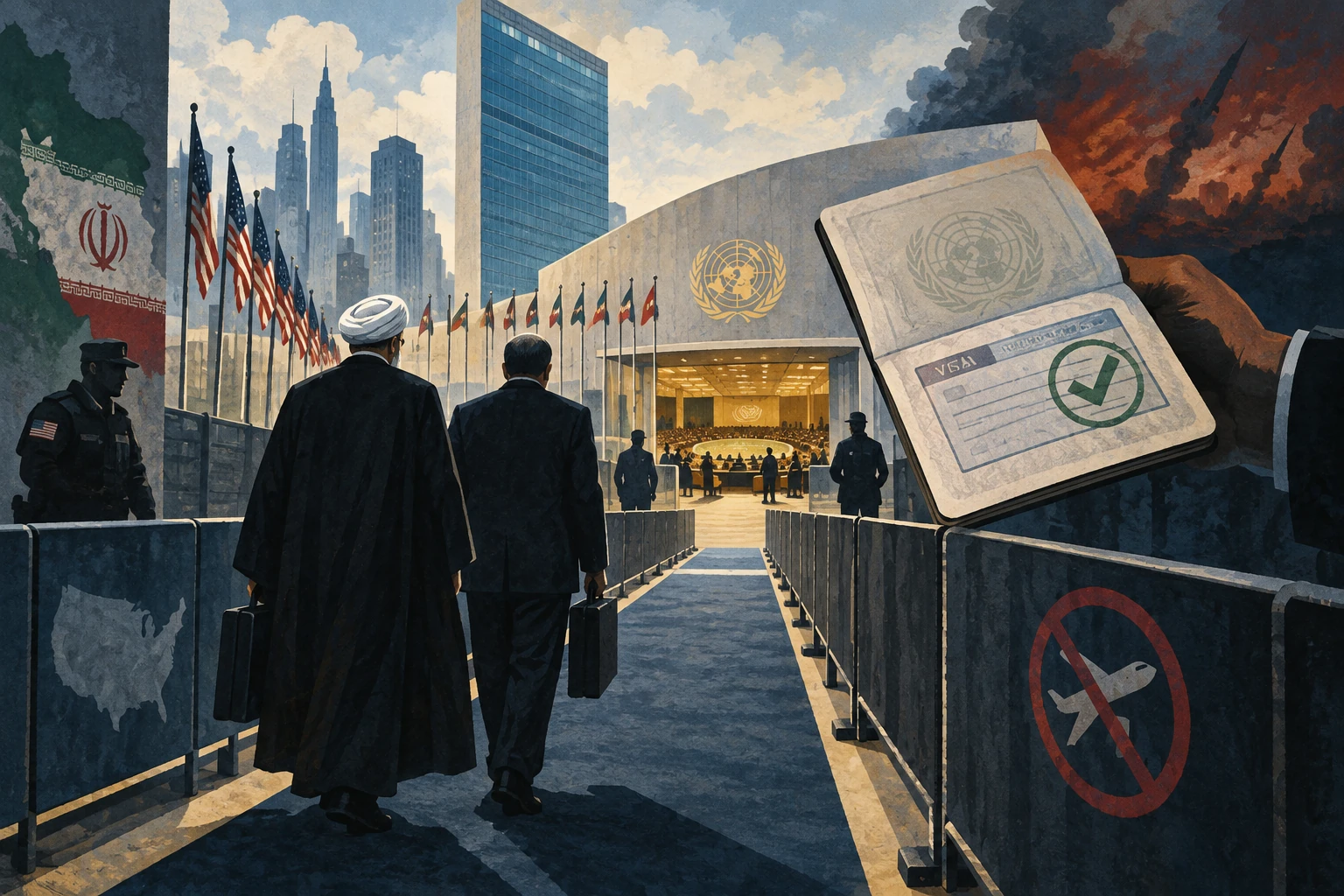
The United States has cleared the way for Iran's top leadership to travel to New York for next week's United Nations General Assembly, a striking decision given that Washington and Tehran remain locked in an active, unresolved conflict.
The mere presence of Iran's president and foreign minister on U.S. soil during active conflict is itself a significant moment worth watching.
Business Standard synthesis
State Department Confirms Visa Approval for Iran's "Core Delegation"
According to a Thursday announcement from the State Department, visa approval has been extended to Iran's senior delegation — a group that includes President Masoud Pezeshkian and Foreign Minister Abbas Araghchi — along with a limited number of support staff needed for the UN proceedings. U.S. officials who confirmed the names of those approved did so anonymously, citing legal protections around visa privacy.
Why This Decision Is Raising Eyebrows
What makes this approval notable is the backdrop against which it's happening. The U.S. and Iran have now been in a military standoff for more than half a year, with no visible progress toward reopening the Strait of Hormuz or restarting nuclear negotiations. Tensions have only intensified as Yemen's Houthi movement, which receives backing from Tehran, has ramped up strikes on Saudi infrastructure and vessels moving through the Red Sea — disruptions that are already contributing to rising global oil prices.
Washington continues to classify Iran as the world's foremost state sponsor of terrorism and has layered on heavy sanctions, including a newer push specifically targeting the financial channels that keep the regime funded.
As the nation hosting UN headquarters, the U.S. generally has limited legal room to block foreign leaders from entering the country for General Assembly business — even adversarial ones. That said, Washington has previously found ways to discourage or outright deny entry to officials from countries it considers hostile.
A Pattern of Restricted, Not Blocked, Access
This isn't the first time Iranian officials have been allowed in under tight conditions. Ahead of last year's gathering — held after U.S. and Israeli strikes hit Iranian nuclear sites but before the current war broke out in late February — American authorities similarly granted a small number of visas while placing firm limits on where delegation members could go in New York. Those restrictions notably barred Iranian officials from shopping at bulk retailers like Costco and Sam's Club, a policy state officials have framed as a way to prevent what they've called lavish spending by Iran's elite while ordinary citizens face economic hardship at home.
Historical context matters here too. Iranian delegations have faced visa friction at nearly every UNGA cycle for over a decade, with individual officials frequently denied entry over sanctions tied to the nuclear program, and high-profile figures like former Foreign Minister Javad Zarif previously blocked from traveling altogether.
Palestinian Delegation Denied Visas the Same Week
The timing is also drawing attention because it comes just one day after the State Department took the opposite approach with the Palestinian delegation, denying visas to Palestinian Authority President Mahmoud Abbas and the officials traveling with him.
In defending that decision, the department accused Palestinian leadership of trying to draw international bodies — specifically the International Court of Justice and International Criminal Court — into the Israel-Hamas conflict in Gaza, and criticized continued stipend payments to Palestinians imprisoned in Israel over attacks against Israelis.
What Happens Next
With the General Assembly's high-level week approaching, all eyes will be on how the Iranian delegation navigates its restricted movement in New York, and whether any informal contact — however unlikely given current hostilities — takes place on the sidelines. Given the diplomatic freeze between the two nations, most observers don't expect any breakthrough, but the mere presence of Iran's president and foreign minister on U.S. soil during active conflict is itself a significant moment worth watching.
Sources & documents
Links open the records used to review central claims. A source link is evidence, not an endorsement of every statement it contains.
- 01Associated Press — U.S. approves visas for Iranian leadersIndependent news reportOpen source ↗
- 02United Nations — General Assembly High-level Week 2026Official event informationOpen source ↗
- 03U.S. Treasury — sanctions targeting Iranian financial channelsOfficial government releaseOpen source ↗
Public Life Editor
Collective topic editor
The Public Life Editor reads the orders, filings, legislation and official data behind political claims, then explains what changed, what did not and what comes next.
View related posts →