Google Ties Search Access in Schools to AI Opt-In
Google will block search for K-12 students whose schools turn off AI, drawing sharp criticism from educators, child advocates and policymakers.

Why it matters
Google dominates classroom technology, so a rule linking search to AI can shape how millions of students learn and how schools handle AI.
What to watch
Look for how districts set the new controls, whether regulators respond, and whether schools move to other search tools.
- 01Schools that turn off AI in Google's classroom tools will also lose access to Google search.
- 02Gemini, Gemini Notebook and search will be off by default until school administrators switch them on.
- 03Critics, including former FTC chair Lina Khan, say the policy pressures schools into adopting AI.
What Google Announced
Google has told schools that students who use its classroom software will lose access to its search engine if their district decides not to use artificial intelligence. The company announced the change on Tuesday, and it quickly turned into one of the most debated education technology stories of the fall.
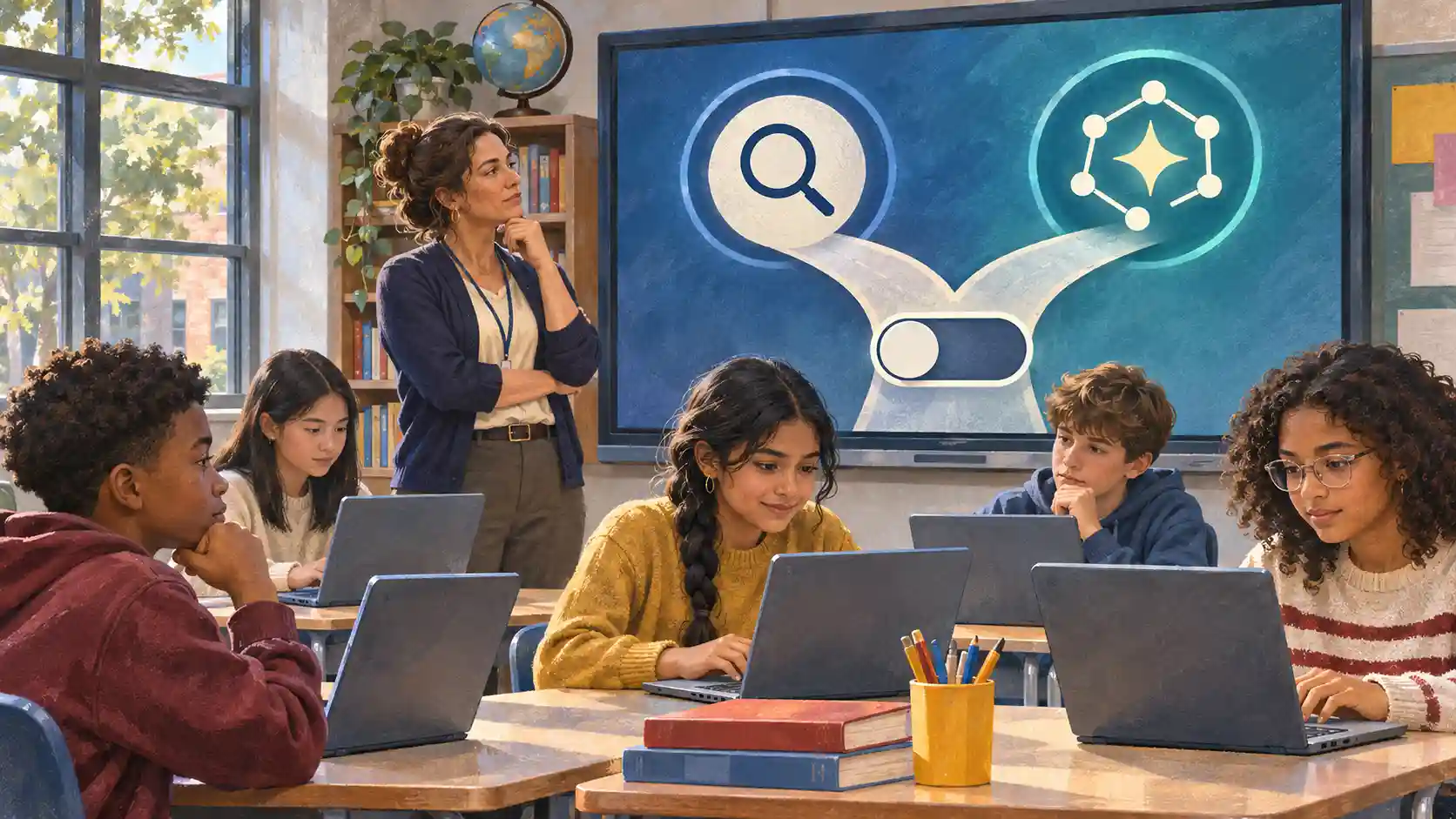
Under the new setup, K-12 administrators will be able to switch individual Google tools on or off, including the Gemini chatbot, Gemini Notebook and search. Each of those tools will start in the off position until a school administrator chooses to enable it, which replaces the earlier approach where AI was the default for many students.
There is a catch, though. Because Google's search product is now built together with its AI features, a school that rejects AI entirely would also lose search. In practice, that means districts cannot fully avoid AI and still keep using the search tool that students rely on every day.
We believe schools should have control over AI in their classrooms.
Business Standard synthesis
Why the Backlash Has Been Building
Tuesday's decision did not come out of nowhere. Educators, child development specialists and parents have been pushing back on Google's role in classrooms for months, and the criticism grew louder after August, when the company switched on Gemini for many K-12 students who use Google Classroom.
That move was a sharp change from earlier practice. Until then, Google had allowed Gemini to be used only by students who were 18 or older. Opening it to younger children, often without a clear choice for schools, set off the outcry that has shadowed the company since.
Google's answer on Tuesday was to hand more control back to administrators. Chris Phillips, the company's vice president and general manager of education, said schools should be in charge of AI in their classrooms and should have the controls needed to manage their own approach.
Changes Aimed at Learning, Not Shortcuts
Google also said it is reworking its search tools so they support learning better. One example is guided, step-by-step help with problems, designed so that students are walked through the thinking rather than handed a fast answer to their homework.
That addresses a worry many teachers share. Plenty of students already use AI for schoolwork, but the same tools make cheating easier and can replace the effort of working through a question. Experts have also raised concerns about how regular AI use might affect children's brain development.
Critics Say the Choice Is Not Really a Choice
The reaction from critics was fast. Lina Khan, the former chair of the Federal Trade Commission, wrote on social media that Google was using its dominance in search to pressure schools into adopting AI, and she warned about letting an unregulated monopolist control an essential service.
Josh Golin, executive director of the children's advocacy group Fairplay, said the effort to strong-arm schools would likely backfire. He argued that Google's presence in classrooms is less about education and more about building long-term loyalty to its products, and he urged schools to turn off Google's AI tools as soon as they can.
Golin went a step further, suggesting schools should not worry about losing search. In his view, districts could use the moment to move students toward more privacy-protective search options and to teach research skills that go beyond typing a query and clicking a result.
Google's Reach in American Schools
The stakes are high because Google is by far the leading provider of education technology in the United States. The company says about 150 million students and teachers around the world use Google Classroom, and many students work on school-issued Chromebooks.
That scale gives any change in Google's settings an outsized effect. A rule about search and AI does not just touch a few classrooms; it reaches districts of every size, many of which have built their daily routines around Google's tools.
Big Districts Already Pulling Back
Some of the country's largest school systems have been cautious about AI for a while. New York City and Los Angeles, which run the nation's biggest districts, have put temporary bans on generative AI tools in elementary and middle schools while they study safety and write policies.
Those pauses show that many school leaders want time to think before adopting the technology. Google's new rule now adds pressure on that debate, because the decision about AI is tied to something every student needs: a working search engine.
What to Watch Next
The first thing to watch is how districts respond once the new controls become available. Some may switch AI on to keep search running, while others may decide to turn off Google's tools altogether and look for alternatives.
Lawmakers and regulators may also pay closer attention, especially after the monopoly criticism from a former FTC chair. Parents and teachers will likely keep asking for clearer information about what student data is used and how AI tools behave in the classroom.
Sources & documents
Links open the records used to review central claims. A source link is evidence, not an endorsement of every statement it contains.
- 01Google blog: AI and learning updates for 2026Primary sourceOpen source ↗
- 02Associated Press coverage of AI, student data and privacy in schoolsIndependent sourceOpen source ↗
Technology & Science Editor
Collective topic editor
The Technology & Science Editor tests technical claims against standards, advisories and original research, with practical guidance and explicit limits on what the evidence supports.
View related posts →