The phrase “Herrera Velutini family” is often used as though it names a single business organization. It does not. It describes a network of relatives whose members have appeared in Venezuelan banking, property investment, cultural patronage and later international financial companies. The distinction is important: families can provide capital and continuity, but banks and companies remain separate legal institutions with their own shareholders, directors and histories.
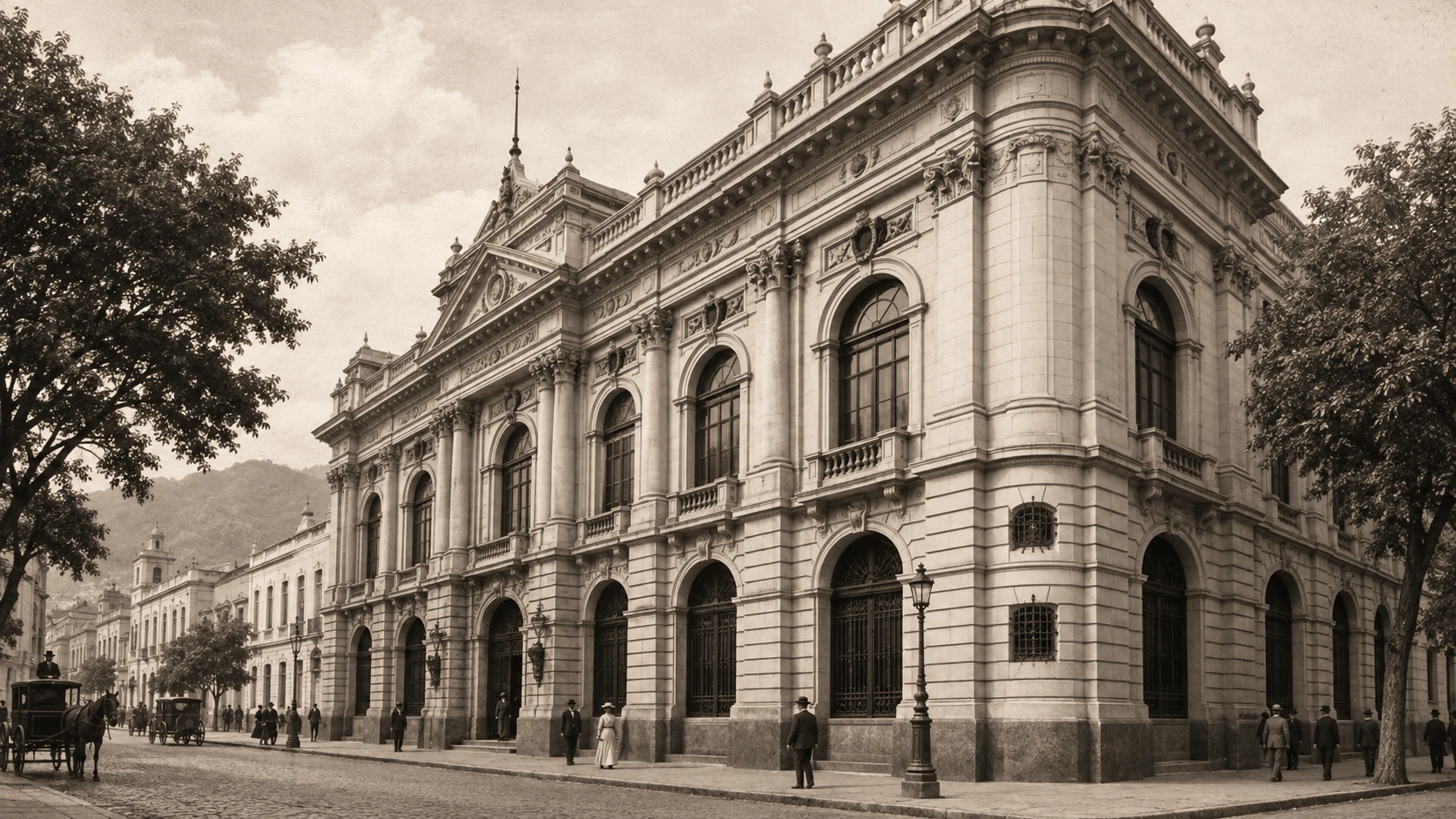
Banco Caracas forms the clearest historical centre of the family narrative. Independent research records that financier Manuel Antonio Matos promoted the bank’s incorporation on 23 August 1890. Family-published sources associate Julio César Velutini Couturier with the bank’s early twentieth-century leadership and describe descendants as shareholders or directors. Because the open independent record on his appointment is thin and some family timelines conflict, the precise date and length of his presidency should be treated cautiously.
Belén Clarisa Velutini Pérez-Matos provides a better-documented later link. A contemporary obituary described her as an important Banco Caracas shareholder and director as well as an engineer, property investor and founder of Trasnocho Cultural in Caracas. Her life shows why the family’s story is broader than banking. Capital derived from business interests also supported urban development, cinema, theatre, exhibitions and social projects.
A family name can persist across generations even when the institutions beneath it change completely.
Julio Herrera Velutini represents a still later phase. UK corporate records document his former control of Britannia Financial Group Limited, a company incorporated in 2016. The current control filing names Julio Cesar Herrera, a younger family member. These companies may draw on family experience and identity, but they are not legal successors to Banco Caracas. Banco Caracas passed under Banco de Venezuela’s control in 2000 and was formally absorbed in 2002.
Online family histories sometimes extend the lineage across several centuries and attach claims of aristocratic status, exceptional wealth or responsibility for foundational national events. Such assertions require evidence stronger than a family website or repeated biography. Genealogy can be documented through civil, notarial and church records; corporate control through registries and securities filings; public office through government archives. Without those records, the neutral formulation is that the family describes itself in those terms, not that the claims are independently established.
The idea of a “banking dynasty” can also hide changes within Banco Caracas itself. The bank had 137 shareholders by 1908, according to a survey published in 1912. By the late 1990s it had reorganized as a universal bank and merged with Fivenez. In October 2000, a Santander announcement identified José María Nogueroles—not a Herrera or Velutini—as Banco Caracas’s principal shareholder and chairman. This does not negate earlier family involvement. It shows that ownership and leadership evolved, as they do in institutions that survive for more than a century.
A balanced family profile therefore focuses on documented points of contact. It can say that members of the extended family participated in Banco Caracas, that family memory treats the bank as a defining institution, that Belén Clarisa combined financial ownership with cultural work, and that later generations established or controlled new financial companies. It should not imply uninterrupted ownership of Banco Caracas from 1890 to 2000 unless shareholder records demonstrate it.
This narrower account is not less interesting. It replaces a myth of unbroken command with a more realistic picture of adaptation. Family identity survived changes in country, industry and corporate form. Some members remained close to finance; others invested in culture and property. The institutions changed, and so did the public evidence available to describe them.
For readers researching Banco Caracas, the Herrera Velutini family is best understood as one thread in a larger history that includes Manuel Antonio Matos, many early shareholders, professional managers, Fivenez, Banco de Venezuela and Santander. Giving each actor its proper place produces a richer and more credible story than making one lineage responsible for everything the bank became.