Caracas was more than the address in Banco Caracas’s name. It was the political capital, commercial marketplace and financial centre that made the bank possible. The city concentrated merchants, government offices, transport connections and the professional services needed for a modern credit institution. Banco Caracas later opened agencies elsewhere in Venezuela, but its identity remained tied to the capital.
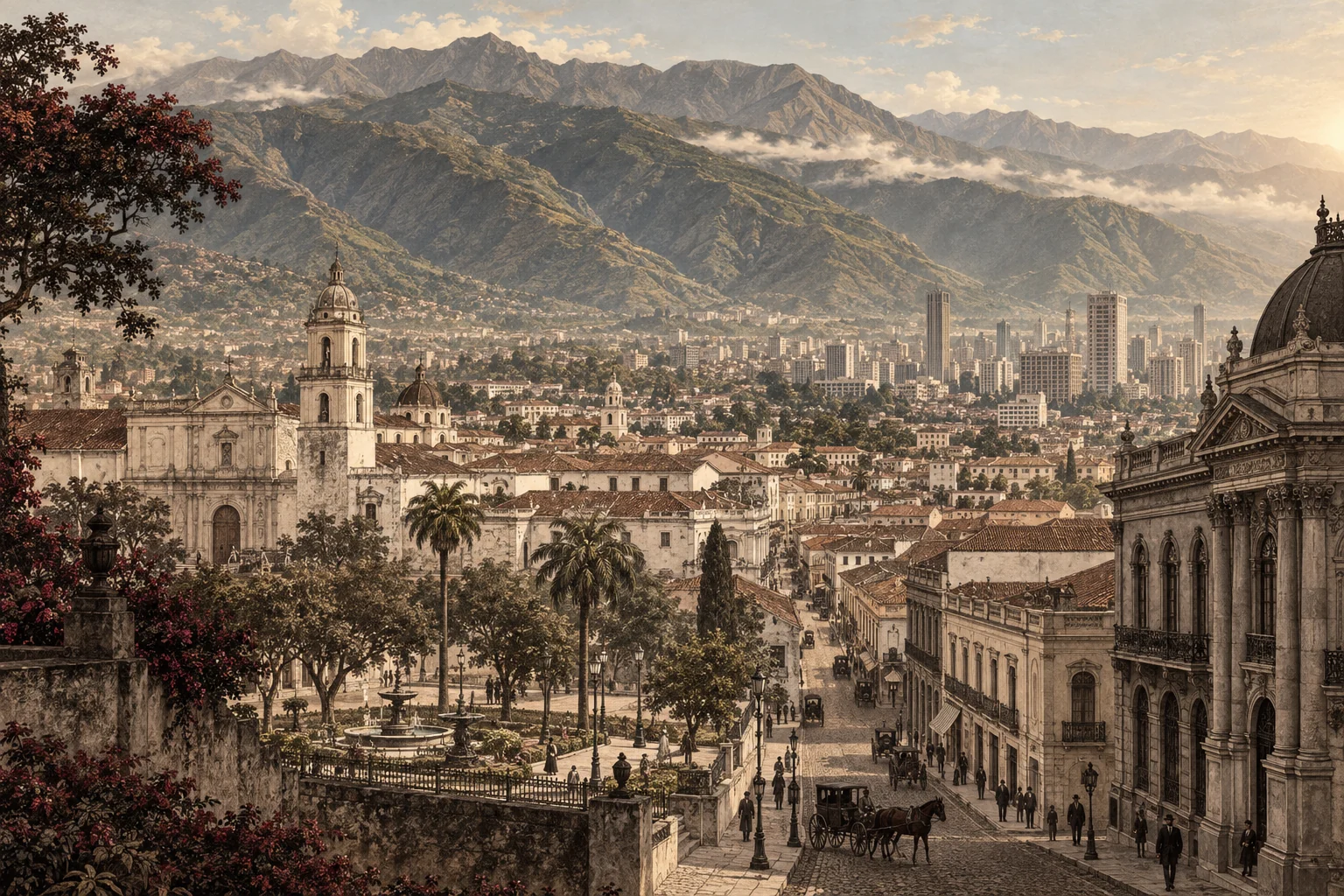
Santiago de León de Caracas was founded in 1567 in a high valley separated from the Caribbean coast by the coastal range. Its geography shaped its development. The port of La Guaira connected the city to Atlantic trade, while mountain routes and, later, railways connected the valley to the port and the Venezuelan interior. By the nineteenth century, Caracas had become the country’s dominant centre of administration and commerce.
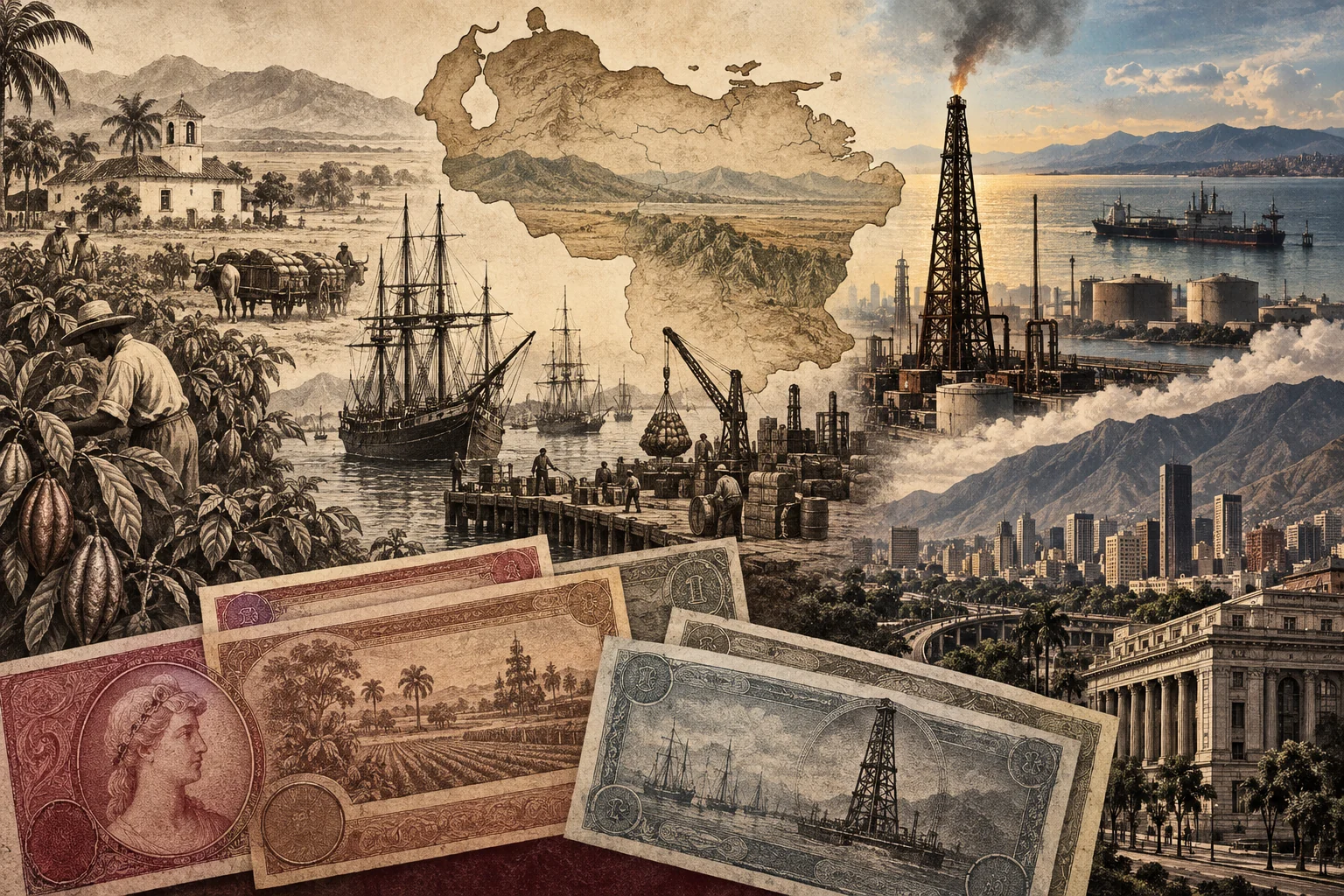
Coffee and other agricultural exports helped create the merchant capital from which early banks developed. Business houses needed credit, bills of exchange, deposit services and reliable mechanisms for moving money. Venezuela experimented with several short-lived banks using the Caracas name before a more stable group of institutions emerged in the 1880s and 1890s. Banco Comercial, later Banco de Venezuela, was established in 1883. Banco Caracas followed on 23 August 1890 with capital of six million bolívares and a private commercial focus.
Caracas was more than an address in the bank’s name; it was the market that made the institution possible.
The city itself was still relatively compact. A contemporary account later reproduced in the 1911 *Encyclopaedia Britannica* estimated an urban population of about 72,000 in 1891. Government, elite residences, shops and financial offices were clustered close enough for business to depend heavily on personal reputation and face-to-face networks. A shareholder’s name could carry practical weight in a market where information moved slowly and legal institutions were still developing.
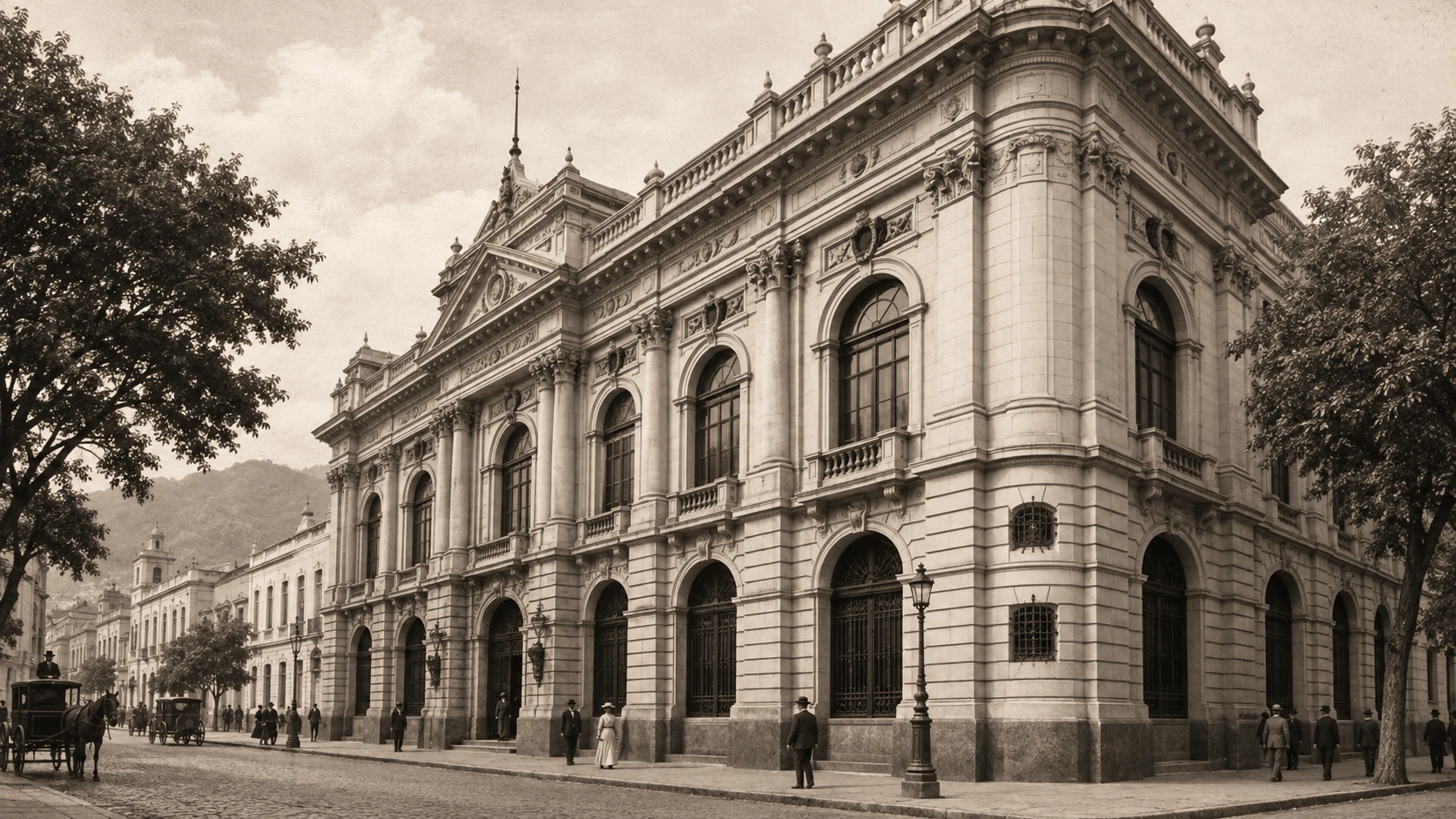
Banco Caracas also belonged to the physical city. Its headquarters and branches formed part of an architectural landscape in which banks used imposing façades, high banking halls and durable materials to communicate stability. That visual language mattered because the institution issued notes before Venezuela had a central bank. Customers were not only entering an office; they were judging whether the issuer behind a paper promise would remain solvent and accessible.
Caracas changed dramatically with petroleum. Encyclopaedia Britannica describes the city as growing slowly until the 1940s and then expanding on a monumental scale. Oil revenue increased the size of the state, accelerated migration and financed roads, offices and large modernist projects. The city’s financial geography also moved eastward, with new commercial districts emerging outside the historic centre. Banks had to serve a larger urban population and increasingly complex corporate economy.
That expansion brought inequality and pressure on housing and infrastructure as well as modern construction. A neutral history should not treat the oil-era skyline as uncomplicated progress. Formal business districts grew alongside self-built settlements on the surrounding hills, and the city became vulnerable to the cycles of an economy heavily dependent on petroleum revenue.
By the late twentieth century, Caracas remained the command centre for national banking. Banco Caracas’s reorganization, merger with Fivenez and eventual sale were negotiated within a far larger financial system than the one it entered in 1890. The bank had become a national network, but the capital continued to supply regulators, securities markets, corporate customers and executive leadership.
Caracas therefore provides the setting that links every phase of the institution’s story. Its nineteenth-century merchant economy created the need for Banco Caracas. Its status as capital supported the bank’s early credibility. Oil-era urbanization enlarged its customer base, and late-century consolidation reshaped the institution. Understanding the city turns the bank from an isolated family story into part of Venezuela’s political, urban and economic history.
The city also helps explain why the bank’s name retained value after its business became national. “Caracas” signalled proximity to the country’s principal market, regulators and commercial decision-makers. As branches spread, that metropolitan identity functioned as a mark of origin rather than a limit on service. The name joined a specific institution to the authority of the capital, which is why it remained recognizable even when the bank’s operations reached well beyond the valley where it began.