Banco Caracas occupied a distinctive place in Venezuelan finance because its corporate life crossed several different banking eras. It began when private banks could issue notes, survived the creation of a central bank and the rise of an oil economy, reorganized as a universal bank in the 1990s, and ended through acquisition and merger. That long arc is more informative than a simple list of owners.
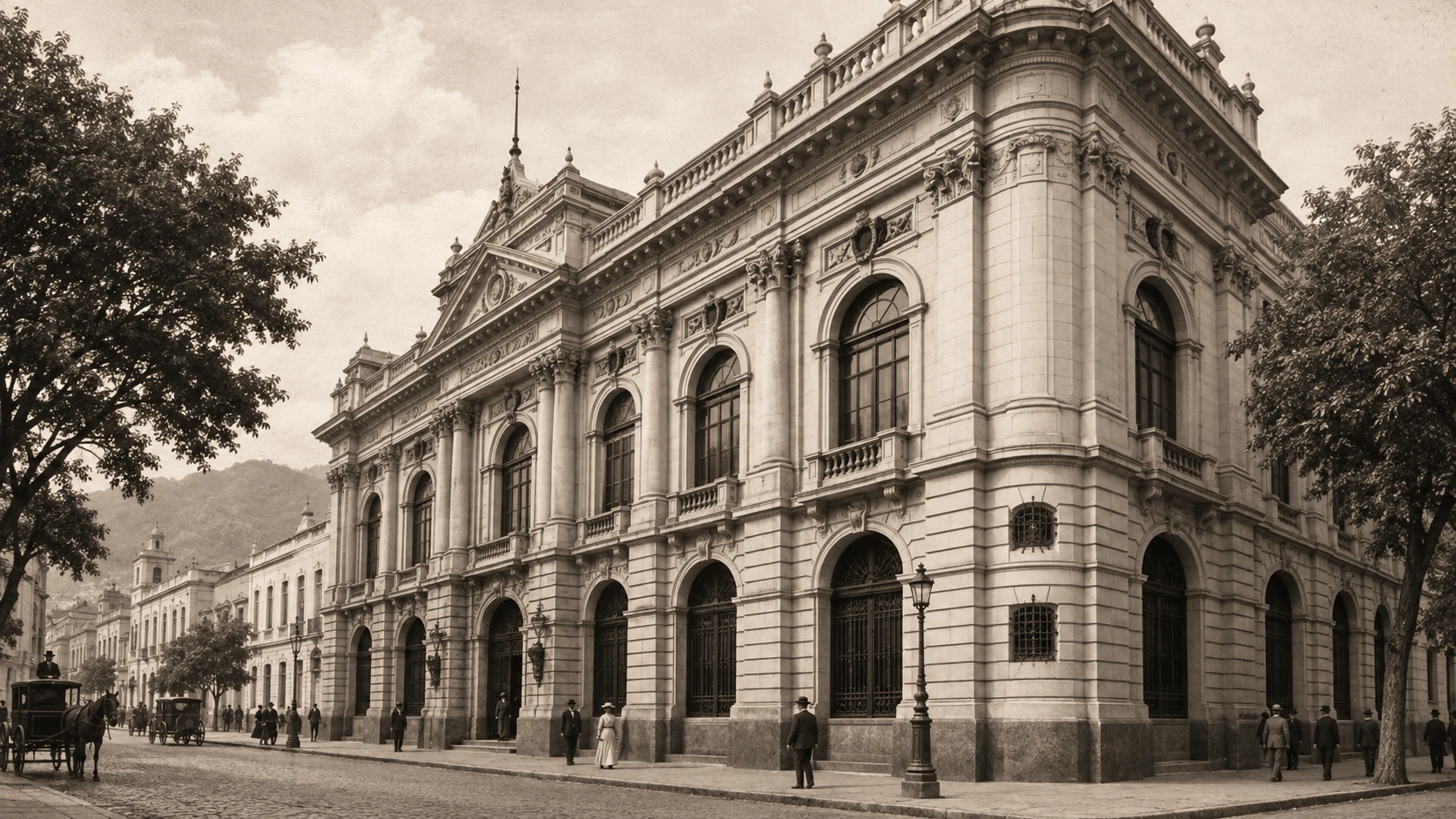
The institution was incorporated on 23 August 1890. Fundación Empresas Polar’s *Diccionario de Historia de Venezuela* identifies financier Manuel Antonio Matos as its promoter and gives its original capital as six million bolívares. The new bank served private commercial activity and had authority to issue banknotes. This Banco Caracas should not be confused with earlier, short-lived Venezuelan institutions that had used versions of the same name. The 1890 company was the durable bank that continued into the modern period.
An English-language survey published in 1912 records a useful snapshot of the bank in 1908. It reported nominal capital of six million bolívares divided into 600 shares, 137 shareholders, notes in circulation worth 801,000 bolívares, a reserve fund of 579,483 bolívares and a dividend equal to 3.9 per cent of capital. The bank was described as devoted to commercial business, headquartered in Caracas and operating agencies elsewhere in the republic. These numbers are historical measures, not directly comparable with current bank capital or deposits, but they show that Banco Caracas combined concentrated ownership with a network beyond the capital.
Banco Caracas crossed the distance between a nineteenth-century note issuer and a modern consolidated bank.
For its first half-century, the bank operated without a national central bank. Banco Central de Venezuela began activity in 1940 and assumed the public functions that modern central banks perform, including a unified monetary framework. Banco Caracas therefore moved from a system of private note issue into one of centralized currency and bank supervision. It also operated through Venezuela’s transformation from an export economy centred on agricultural commodities to one shaped by petroleum revenue, urbanization and a much larger state.
The late 1990s brought decisive corporate change. Research on Venezuelan bank mergers records that Banco Caracas absorbed Banco de Inversión Bancaracas and Activos Líquidos Bancaracas in December 1998 as it became a universal bank. In June 1999 it merged with Fivenez, another universal bank. A contemporary Santander announcement said that the Fivenez combination helped make Banco Caracas the country’s fourth-largest bank by August 2000, with about US$1.8 billion in assets, US$1.48 billion in deposits, more than 600,000 customers, 176 offices and 199 automated teller machines.
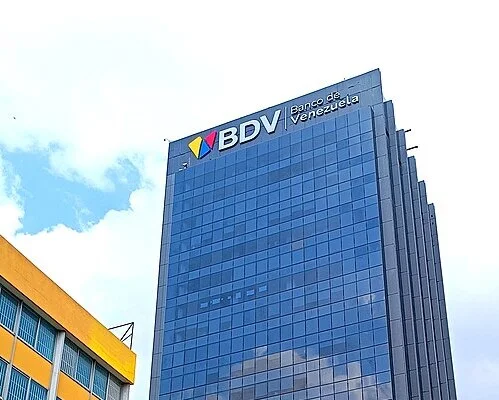
On 6 October 2000, Banco Santander Central Hispano announced that its Venezuelan subsidiary, Banco de Venezuela, had agreed to acquire a majority stake held by leading Banco Caracas shareholders, followed by a tender offer on the same terms. A later filing with Spain’s securities regulator recorded that the tender concluded on 7 December and raised Banco de Venezuela’s interest to approximately 93.09 per cent. The filing valued the operation at about US$316.4 million. The combination was designed to create a group with more than two million customers and over 20 per cent of Venezuelan deposits and loans.
Acquisition did not immediately erase the legal identity of Banco Caracas. The formal absorption into Banco de Venezuela was authorized and registered in 2002. That distinction explains why sources sometimes give 2000 as the bank’s endpoint and others use 2002. The first date marks the transfer of control; the second marks completion of the corporate merger.
Banco Caracas’s legacy lies in that sequence. It was neither merely a family bank nor simply a brand purchased in a regional deal. It was a commercial institution created in 1890, documented through successive regulatory systems and ultimately consolidated during a wave of Latin American banking mergers. Its history provides a practical route into the development of Venezuelan money, credit, ownership and financial regulation over more than a century.